
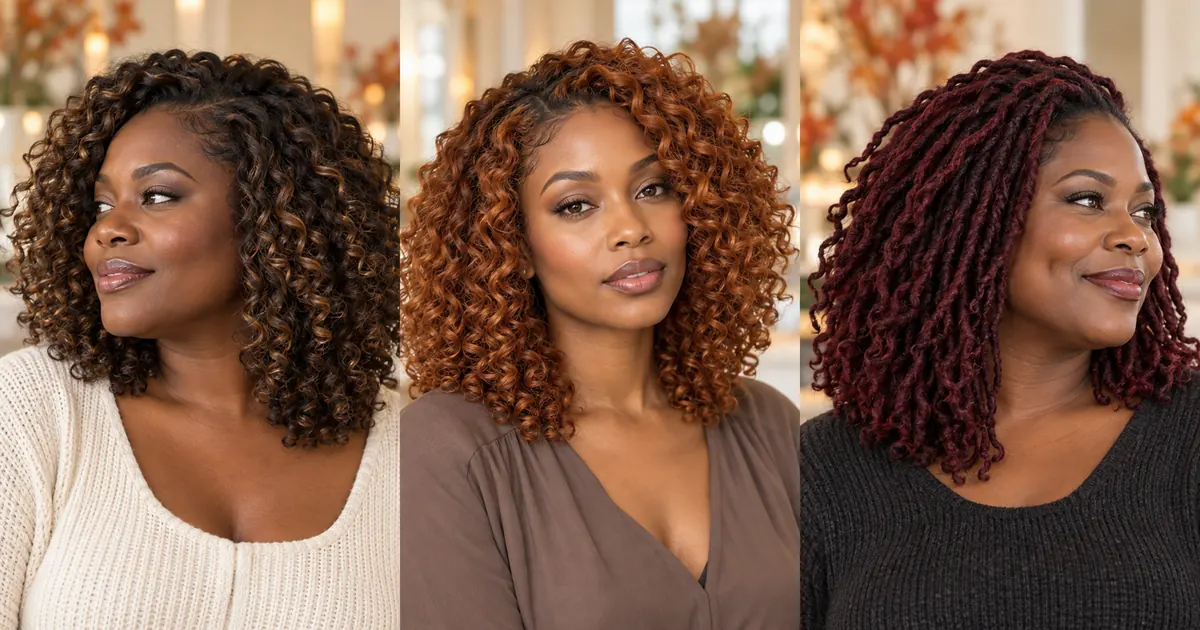
A new fall hair color can be as quiet as a warmer brown or as noticeable as copper curls catching the afternoon light. The hard part is choosing a shade that looks the way you want on your hair, rather than only in a saved photo.
Black women have a wide range of skin tones, undertones, hair textures, and personal styles. There is no single autumn shade that suits everyone. A deep espresso brown might be your favorite refresh, while someone else wants burgundy locs or a bright ginger pixie.
These fall hair colors Black women offer 23 different combinations of shade, placement, and hairstyle. You will find soft browns, golden highlights, rich reds, and bolder colors, with details you can use when choosing reference photos or talking with your stylist.
Pay attention to where the color sits, too. A few lighter curls around your face create a different look than an all-over change. Start with the ideas that catch your eye, then narrow them down by how much contrast you want.
1. Soft Espresso Brown With a Glossy Finish
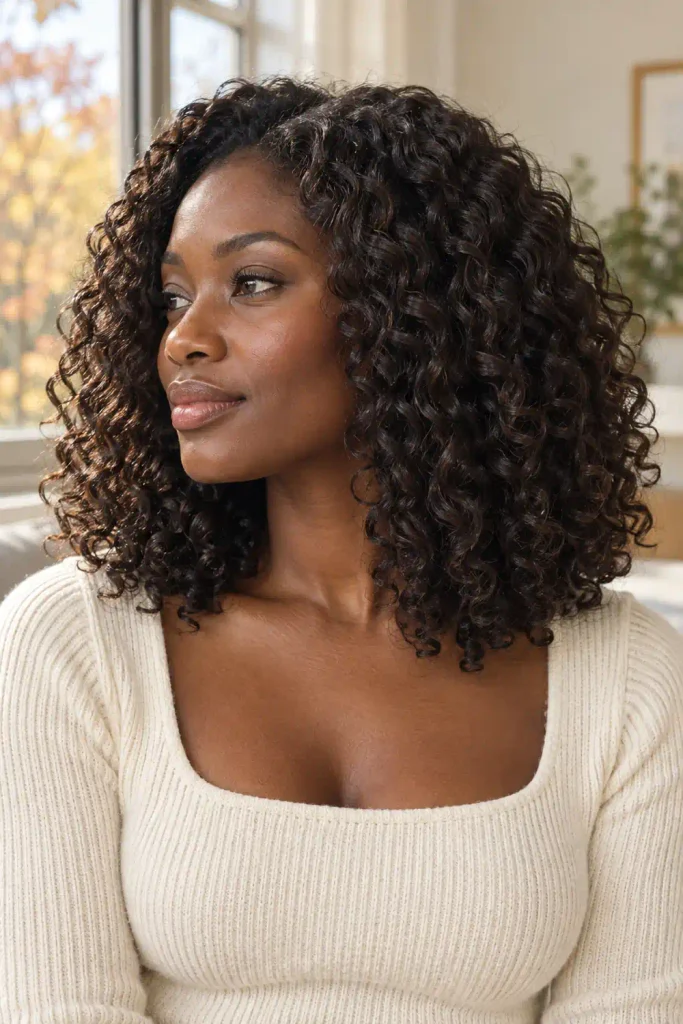
Espresso brown gives dark hair a subtle change that becomes more noticeable near a window or outside. The shade stays deep, with a brown reflection that separates it from a flat black finish.
Ask for a nearly black brown rather than a medium brunette. On a smooth bob, the color emphasizes the outline of the cut. On natural curls, it lets the texture remain the main feature.
Reference photo tip: Choose an image taken in daylight. A heavily edited salon photo can make espresso look much lighter than the result you want.
2. Mocha Brown With a Soft Root Melt
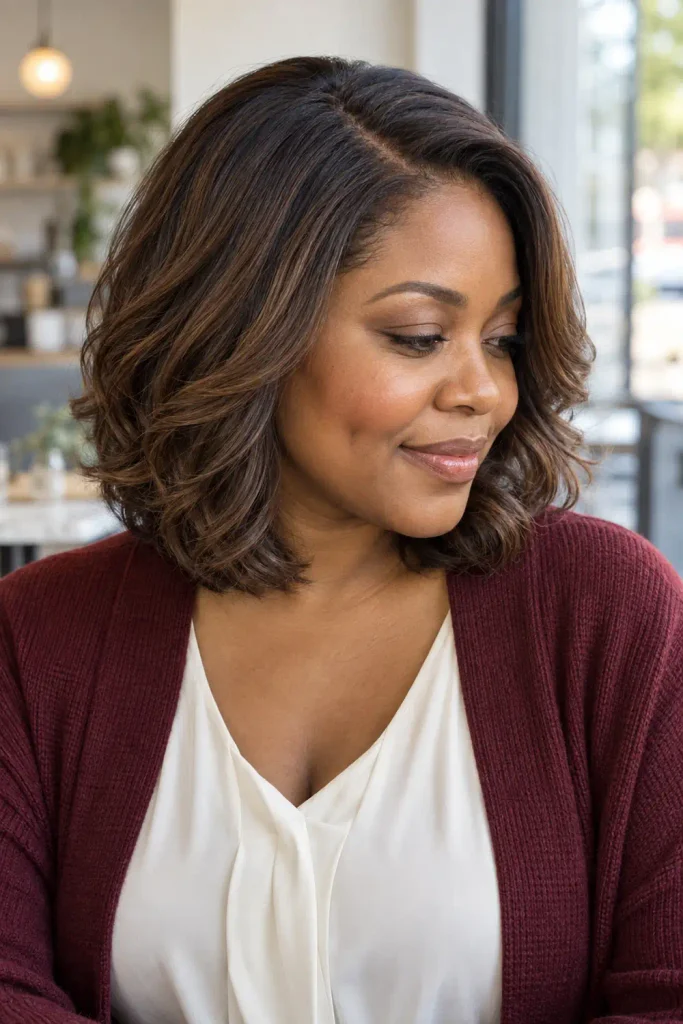
A mocha brown root melt creates a gentle transition between a darker crown and slightly lighter lengths. It works well if you want dimension without a visible stripe where the shades meet.
Keep the difference between the roots and ends small. Deep brown roots with muted mocha lengths give loose curls or a layered bob a softly blended look.
When choosing your reference, look for:
- A dark area around the part.
- A gradual change through the middle.
- Brown ends that stay close to the base color.
The blend should still look connected when your hair is pulled back.
3. Golden Chestnut Brown on Defined Curls
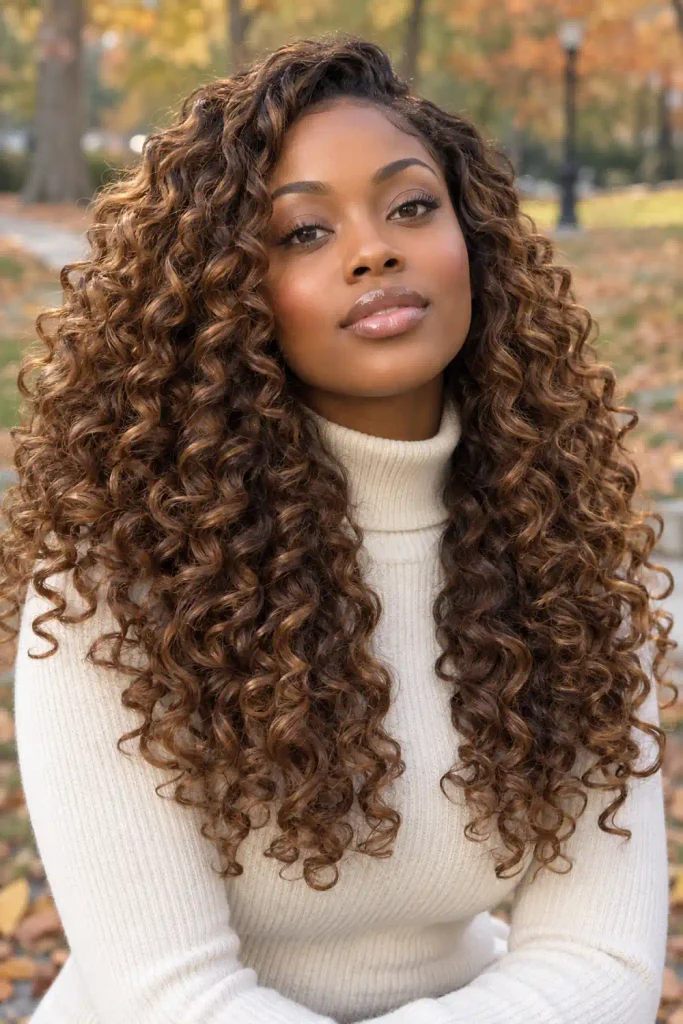
Golden chestnut sits between a rich brown and a warm, softly golden shade. On defined curls, its lighter reflections show along the bends, making the color look different as the hair moves.
Keep some deeper brown underneath if you prefer visible contrast. A completely uniform chestnut finish gives a more noticeable overall change.
Ask your stylist to show you a chestnut reference with your preferred amount of gold. Some versions lean reddish, while others look more like a warm brunette.
A cream sweater or simple black neckline makes the color easy to see.
4. Cinnamon Brown on a Rounded Natural Afro
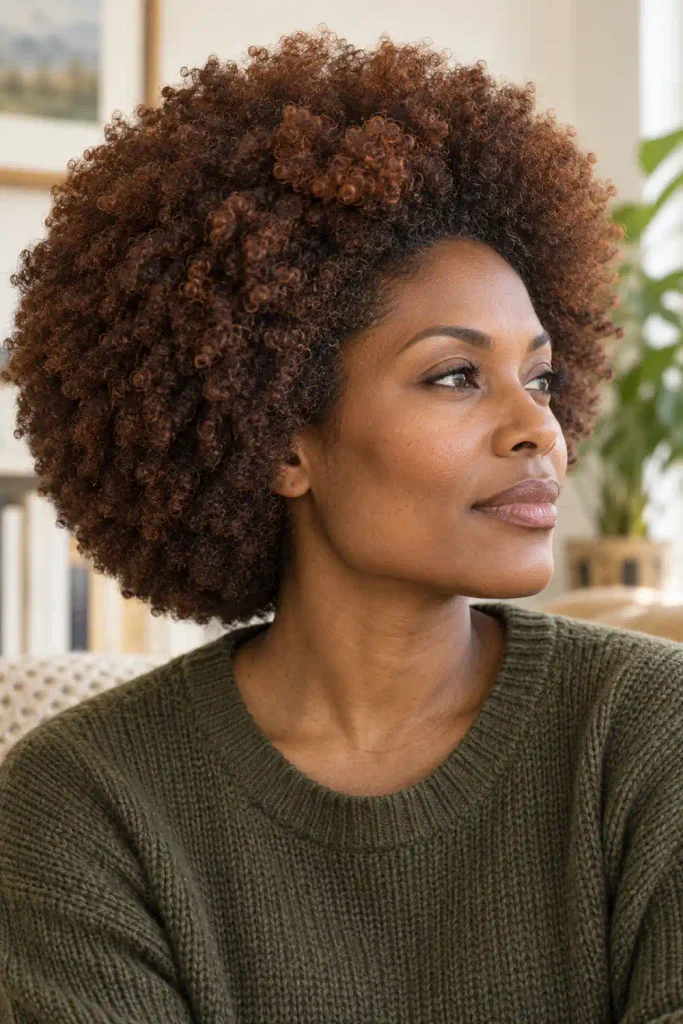
The appeal of cinnamon brown is its muted reddish warmth. It brings a fall feel to natural hair without the brightness of a full copper shade.
On a rounded afro, the color follows the shape of the hair. A darker interior with cinnamon tones across the outside creates a different effect than coloring every section evenly.
For a clear reference, choose a photo where the individual coils remain visible. Strong orange lighting can make the shade look much redder.
Styling note: Keep the silhouette soft and rounded so the warm color and natural texture share the attention.
5. Deep Mahogany on a Sleek Chin Length Bob
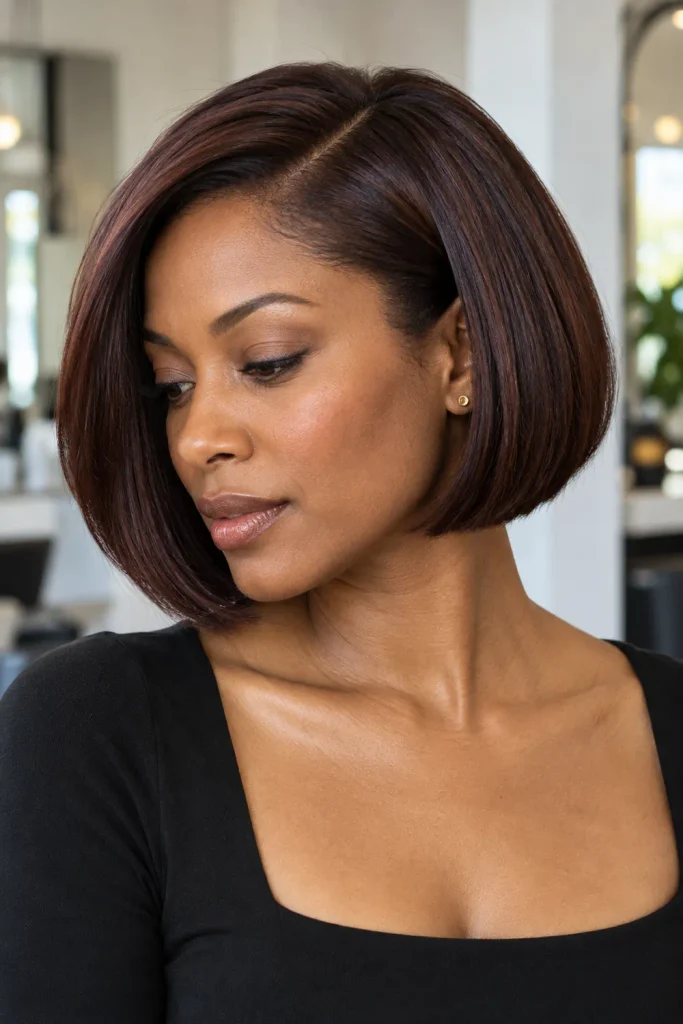
Mahogany can look dark brown at first glance, then reveal a red undertone when the light changes. That makes it an interesting option for a short cut with a clean outline.
A chin-length bob gives the shade a solid surface to show on. A side part makes the look softer, while a middle part emphasizes the shape.
Decide how much red you want before choosing your reference:
- Brown-led mahogany gives a quieter result.
- Red-led mahogany makes the color more noticeable.
Check both indoor and outdoor photos so your expectations match the shade.
6. Cool Ash Brown on a Flowing Silk Press
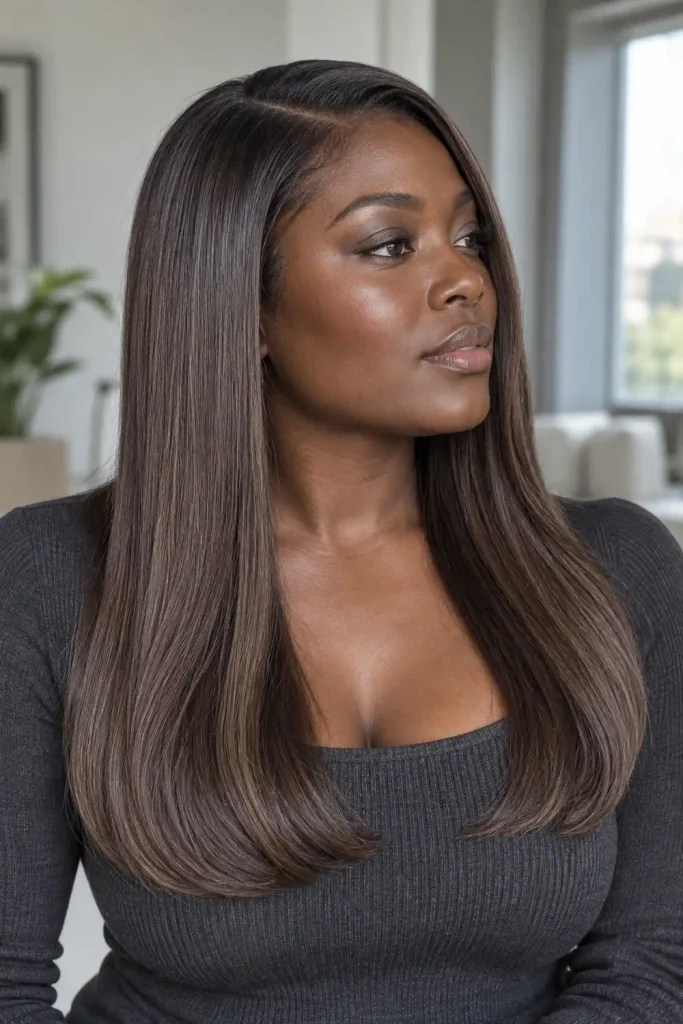
Warm autumn colors are one option, but ash brown offers a cooler direction. Its smoky appearance suits someone who prefers muted brown to golden, copper, or reddish tones.
On a silk press, the smooth lengths make the cool color easy to see. A slightly darker root keeps the overall look grounded.
Be specific about the finish you want. “Ash brown” can describe anything from a deep, soft brunette to a much lighter taupe shade.
Salon note: Bring a reference with clearly visible brown tones if you want a cool brunette rather than a silvery result.
7. Mushroom Brown With a Dark Shadow Root
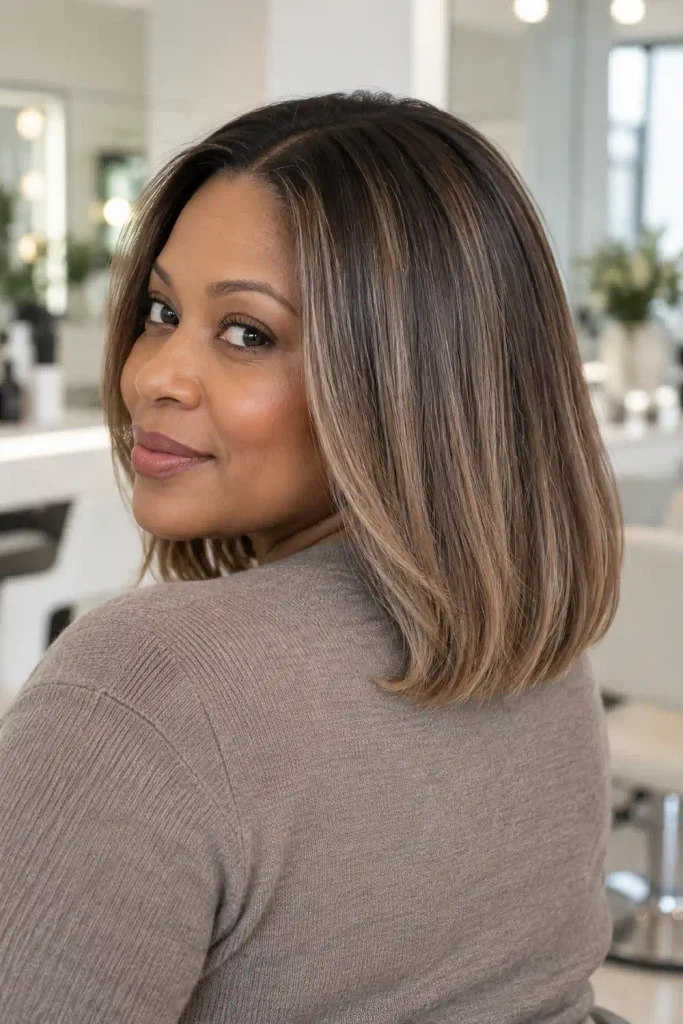
Mushroom brown combines brown with muted beige and taupe tones. Compared with a darker ash brown, it usually reads as a softer, more visibly neutral color.
A dark shadow root gives this shade a clear contrast at the crown. On a shoulder-length lob, the lighter lengths stand out around the face without making the entire style look pale.
Look for a reference where you can see three areas:
- The darker root.
- The neutral brown middle.
- The softly beige ends.
Avoid choosing only by the color name. The balance of those shades matters more.
8. Caramel Face Framing Highlights on Dark Hair
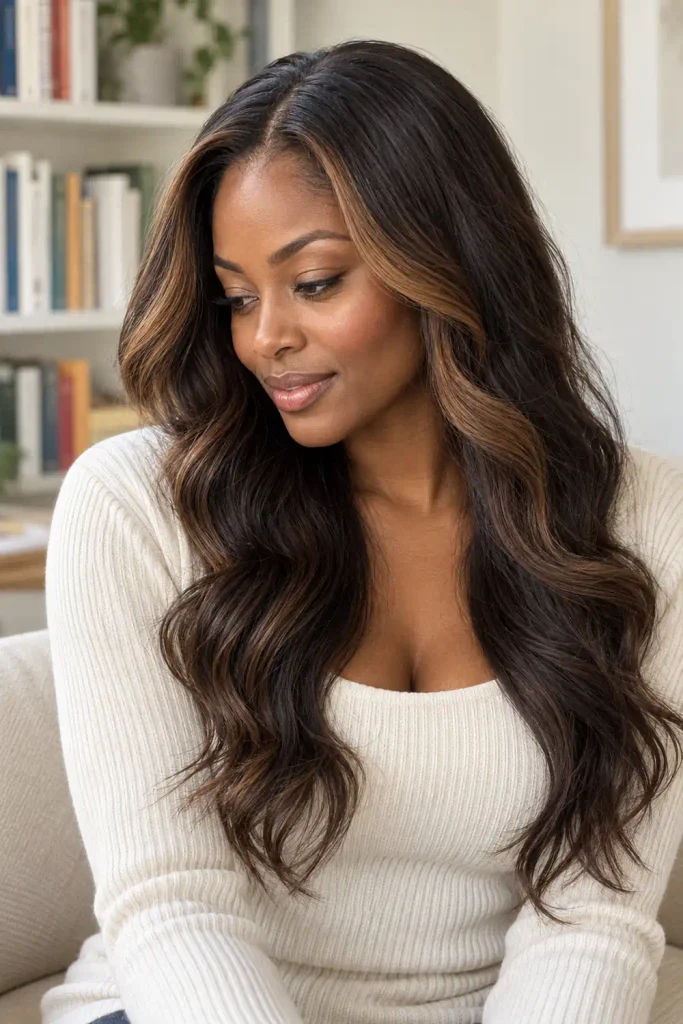
A small amount of caramel around the face can change how dark hair looks without making the whole style lighter. The placement becomes especially noticeable when you tuck your hair behind your ears.
For a softer finish, choose narrow pieces that blend into the surrounding hair. Wider sections create a stronger contrast.
Ask for the highlights to follow the way you usually wear your part. A reference with a middle part may not show the result you want from a deep side part.
Keep the remaining lengths dark if the front pieces are meant to be the focus.
9. Fine Bronze Highlights Through Natural Coils
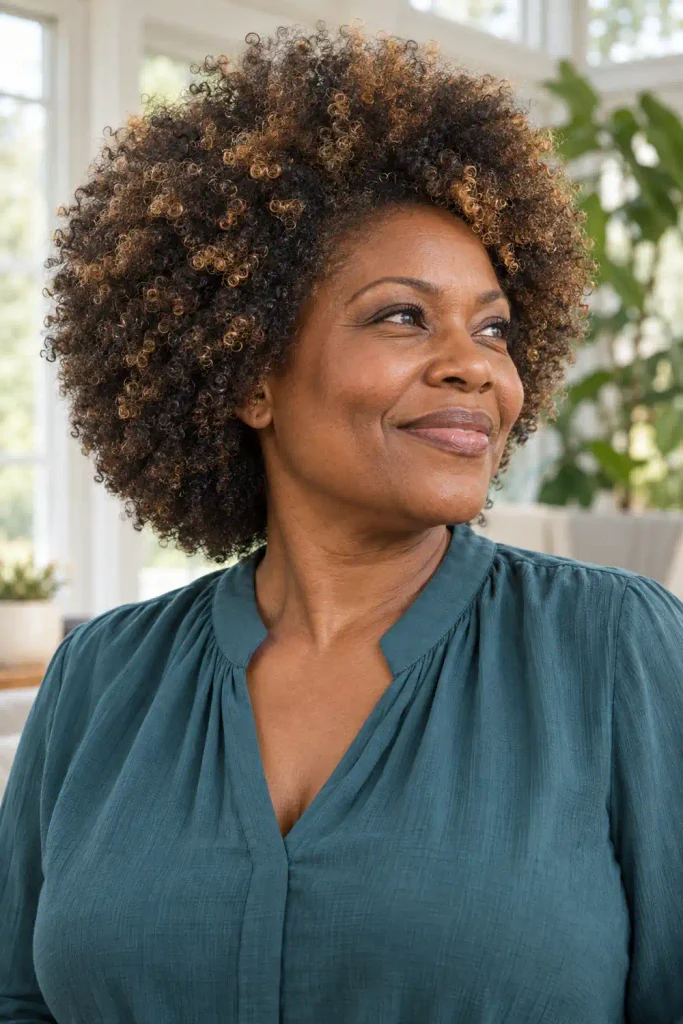
Bronze highlights bring a golden brown reflection to natural coils. Fine pieces scattered through the hair create a more detailed effect than a few large blocks of lighter color.
The placement matters as much as the shade. Highlights across the visible outer layers can show clearly in a wash-and-go, while pieces near the crown become noticeable in a puff.
Choose a reference that shows the hair both loose and gathered.
What to ask for: Small bronze accents with plenty of dark hair between them. That spacing helps the finished look retain its depth.
10. Toffee Balayage on Shoulder Length Waves
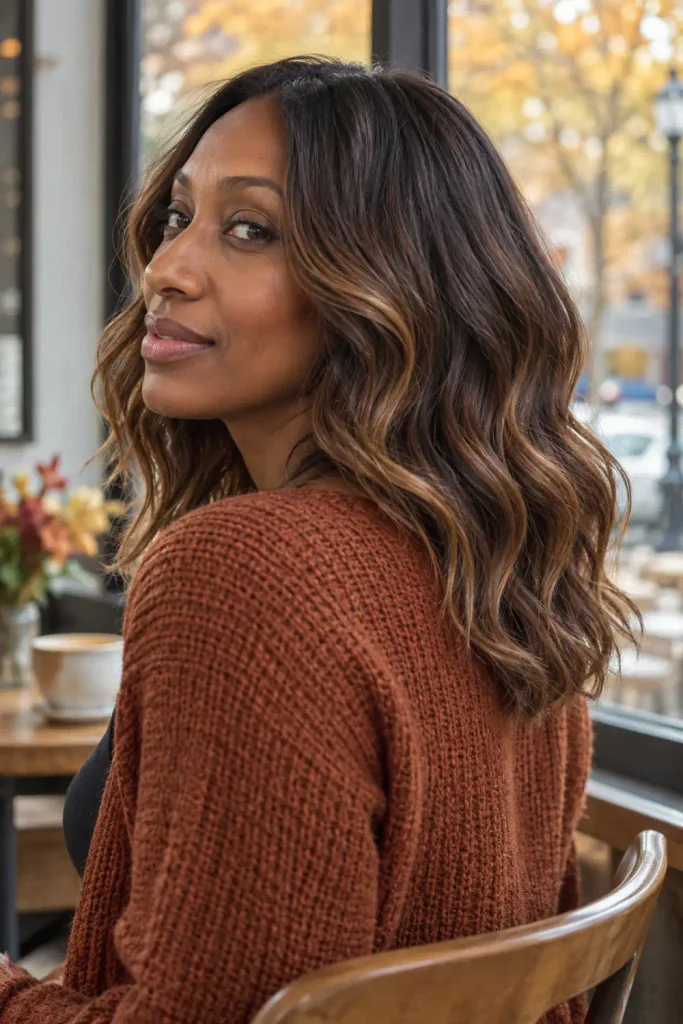
Toffee balayage places warm brown color through the middle and ends while leaving more depth near the roots. On shoulder-length waves, the lighter sections trace the curves of the hair.
Choose a brown-led toffee if you want a softer result. A more golden version creates a brighter contrast against a dark base.
Before your appointment:
- Pick a reference with a similar starting hair color.
- Decide how high the lighter sections should begin.
- Show how light you want the ends.
A photo of the back is useful because much of this color sits through the lengths.
11. Honey Blonde Ends With a Deep Brown Base
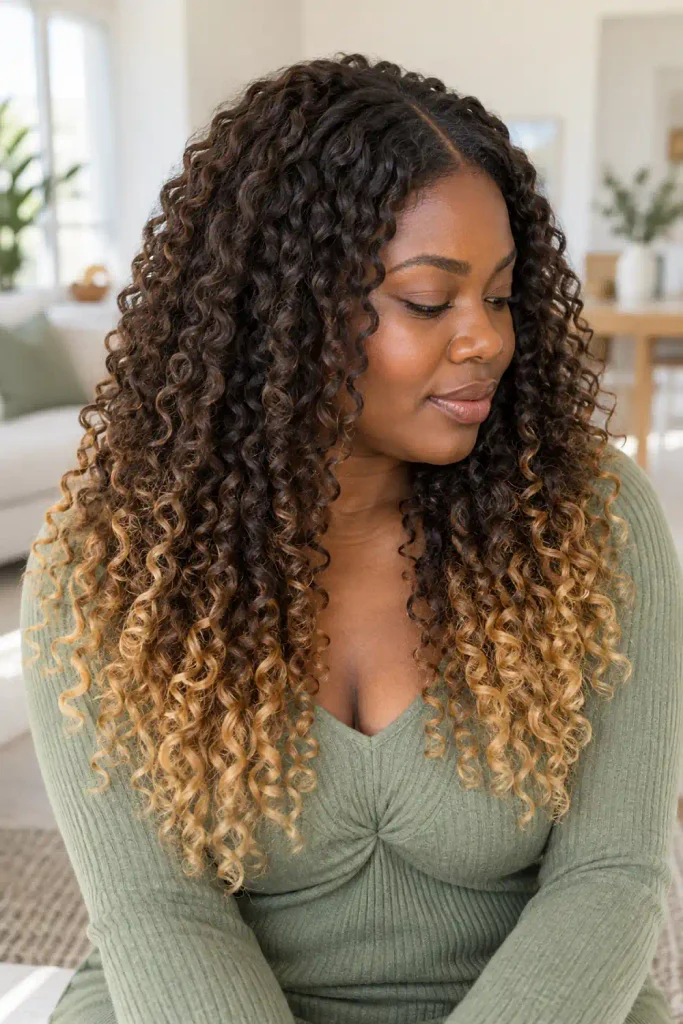
Honey blonde ends give a clear two-tone effect while keeping the crown dark. The golden color becomes especially visible on longer curls or a layered twist-out.
Decide where you want the blonde to begin. Color close to the tips creates a smaller accent, while blonde through the lower half makes a bigger change.
Ask for a blended transition if you prefer a gradual finish. A sharper border creates a more graphic look.
Reference detail: Show the full length of the hairstyle. A close-up of blonde ends alone will not explain how much dark hair you want to keep.
12. Golden Bronde on Layered Curls
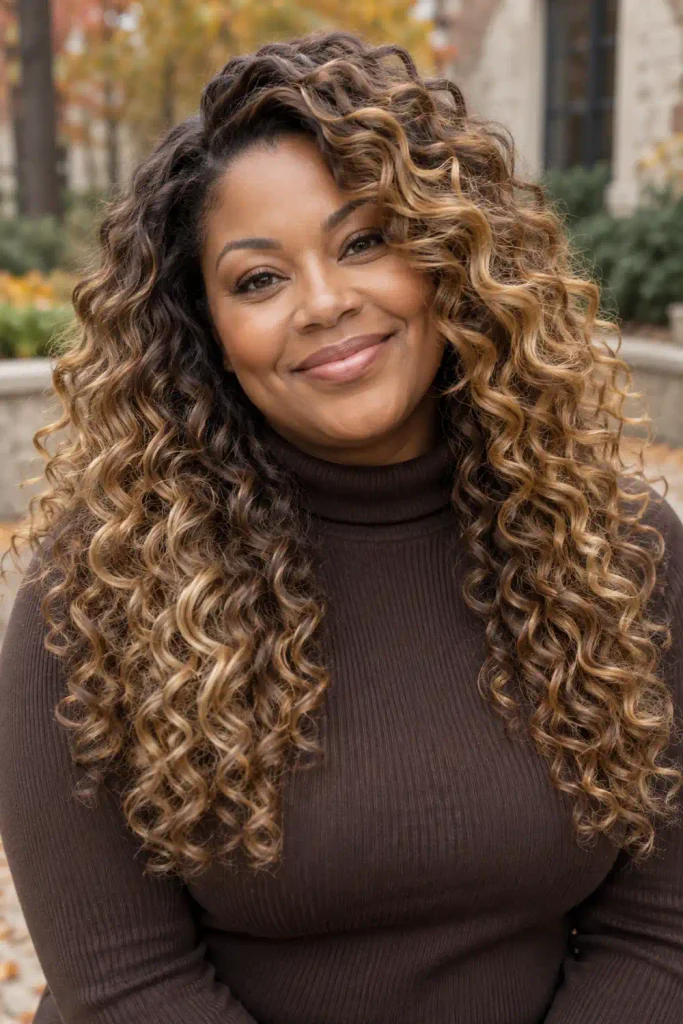
Bronde combines brown and blonde, giving you a look that sits between the two. A golden version brings warmth to layered curls while allowing darker sections to remain visible.
Unlike blonde tips, the lighter color appears throughout the hairstyle. That makes the overall result look brighter, particularly around the crown and face.
Save references that show:
- Brown visible between the lighter curls.
- A root shade you like.
- The level of gold you want.
If every curl looks blonde in your reference, the result may be lighter than the brown-and-blonde balance you had in mind.
13. Amber Auburn on a Tapered Natural Cut
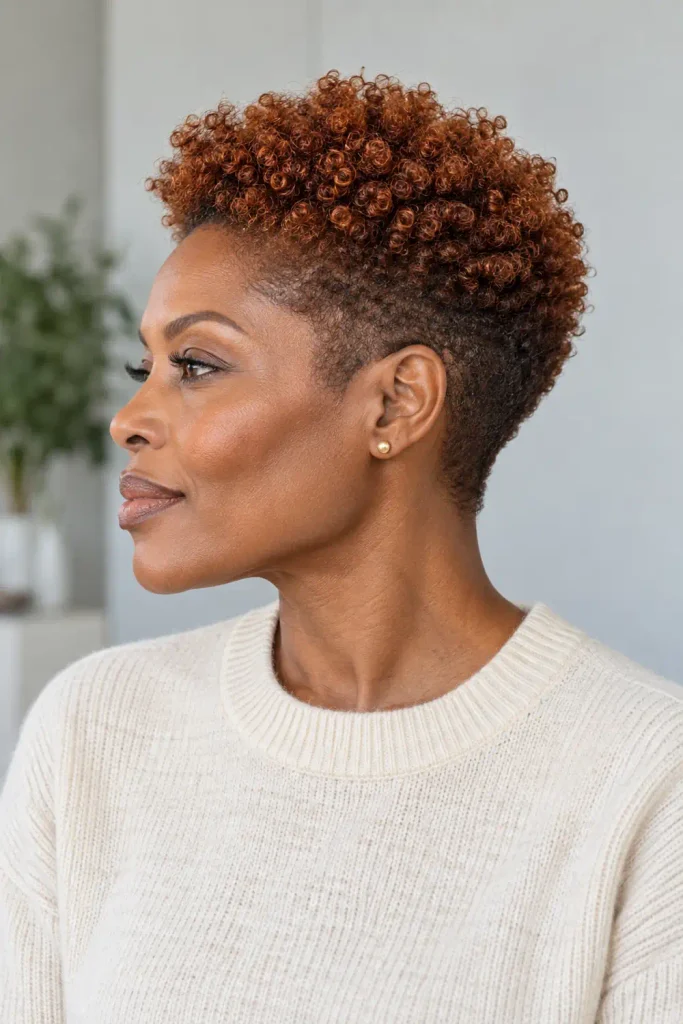
Amber auburn gives a tapered natural cut a warm reddish brown finish. Concentrating the color through the longer top makes the contrast between the crown and shorter sides more visible.
The shade can lean brown, red, or softly orange. Choose the balance you prefer rather than asking for auburn without a reference.
A darker side section creates a bold outline. Coloring the whole cut gives a more uniform finish.
Cut detail: Bring a side-view photo as well as a front view. The taper and the placement of the color need to work together.
14. Burnished Copper Knotless Braids With Dark Roots
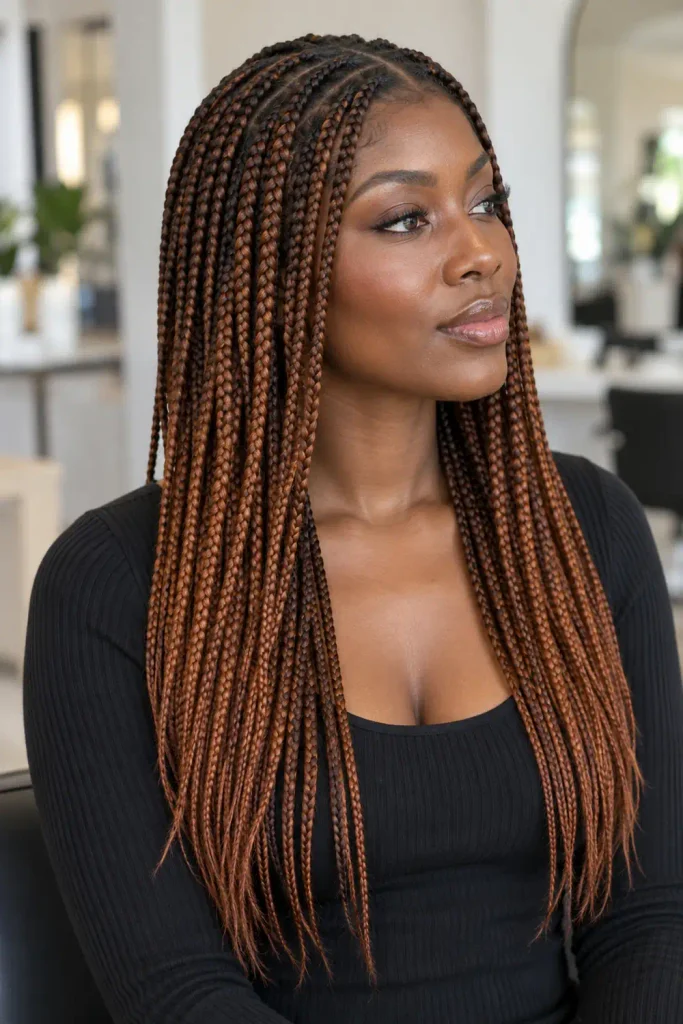
Copper knotless braids let you build an autumn color look through your choice of braiding hair. A burnished shade has a deeper, browner appearance than a bright orange copper.
A dark-root blend creates a gradual transition at the top. You could also mix dark brown and copper strands throughout for a more varied finish.
Compare the actual braiding hair options before choosing. Color numbers and names can look different across brands.
Braiding note: Show your braider the balance you want between dark strands and copper. The same two colors can produce very different results depending on the mix.
15. Bright Ginger on a Textured Pixie Cut
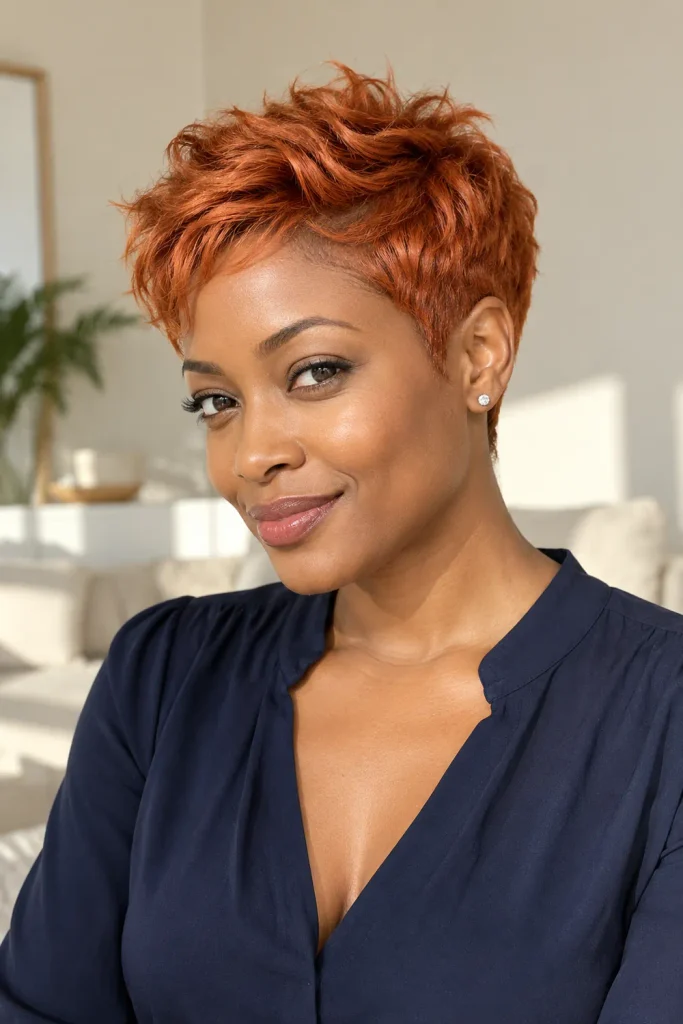
Ginger makes a textured pixie feel immediately more expressive. The orange-led shade is easy to see on a short cut, particularly when the top has enough length to show movement.
A soft ginger finish gives a lighter, more muted result. A vivid version creates stronger contrast and puts the color at the center of the look.
Keep the reference simple:
- One photo for the shade.
- One photo for the cut.
- A side view showing the length you want.
Small earrings and an uncluttered neckline allow the cropped shape and bright color to stand out.
16. Pumpkin Spice Highlights on Dark Curly Hair
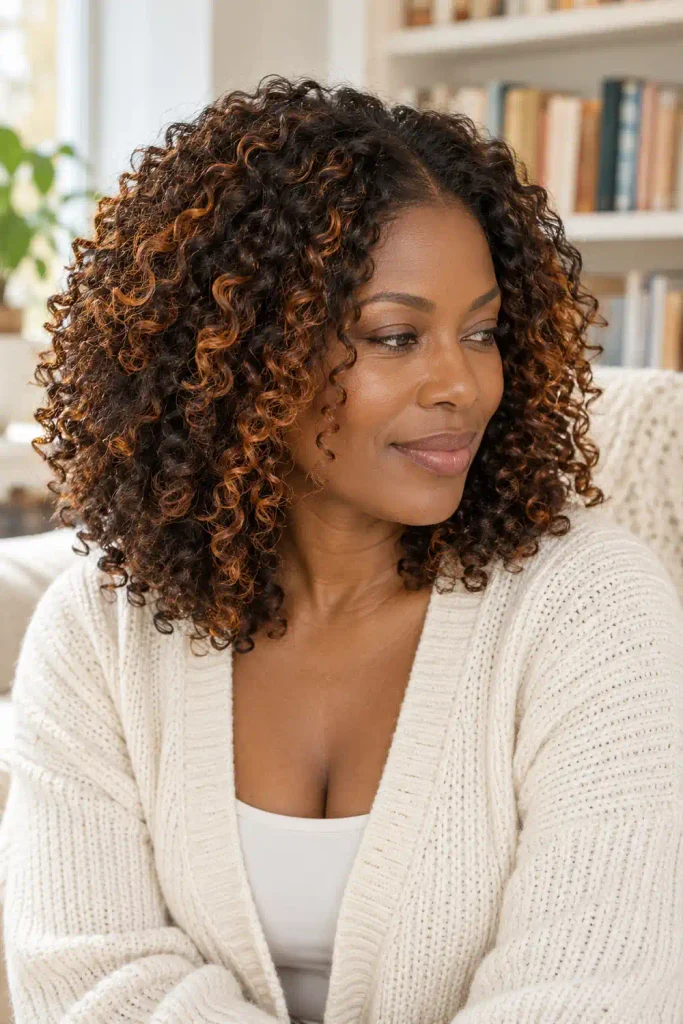
Pumpkin spice highlights mix orange copper with warm brown while leaving dark curls visible between the lighter pieces. The effect is more broken up than an all-over ginger color.
Place a few accents near the face and scatter the rest through the outer curls. Large blocks create a striped appearance, while smaller sections give a more blended finish.
Ask for a brown-based copper if you prefer a deeper result.
Placement tip: Choose a reference with a curl pattern close to yours. Straight-hair highlights will not show how the color may appear across curled sections.
17. Chocolate Cherry on Long, Loose Waves
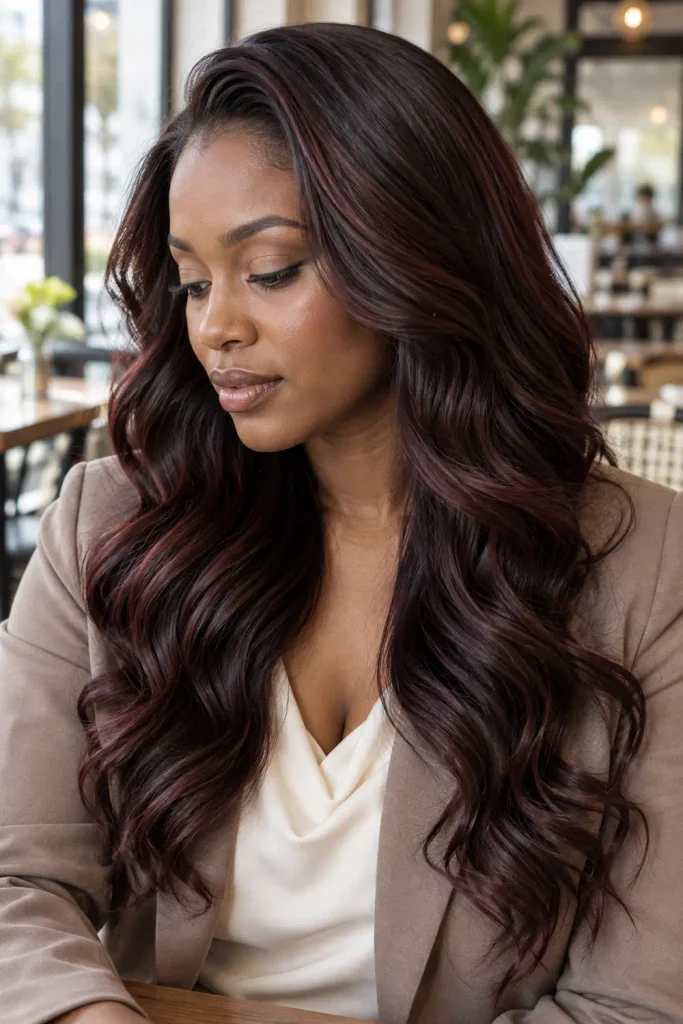
Chocolate cherry looks like a rich brunette with a deep red reflection. It suits someone who wants a noticeable color detail while keeping the overall result dark.
Long waves give the shade room to show in alternating areas of light and shadow. A smooth finish makes the red reflection more visible, while a textured finish breaks it into smaller flashes.
Compare two references before deciding:
- Chocolate-led color with a subtle cherry tone.
- Cherry-led color with a darker brown base.
The first feels quieter. The second creates a stronger red impression even before the light catches it.
18. Deep Wine Burgundy on Locs
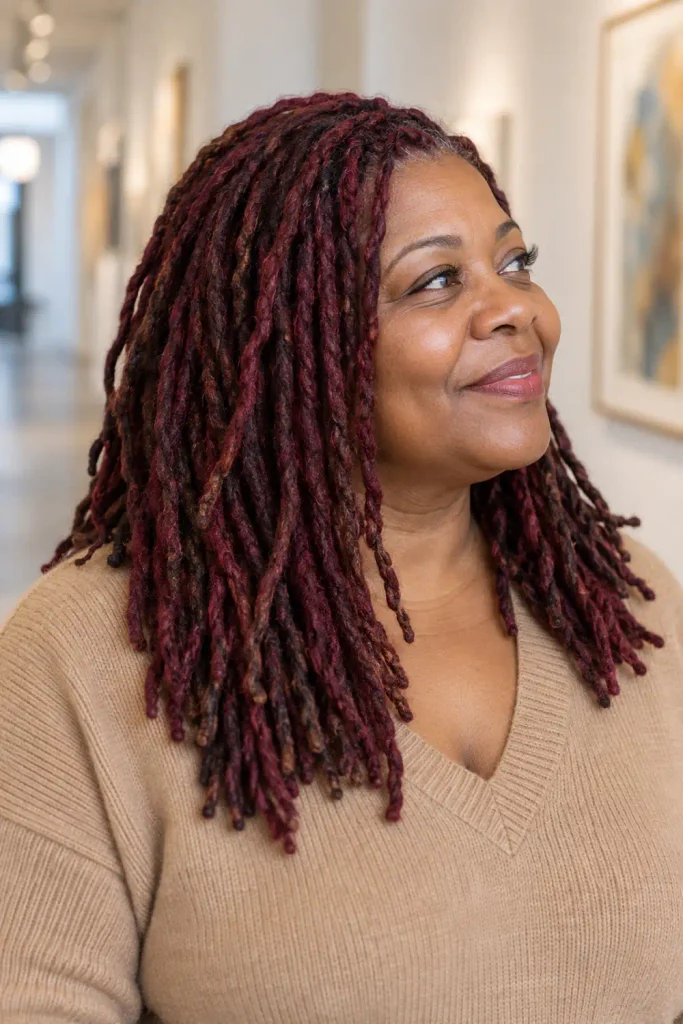
Wine burgundy gives locs a rich red shade with a darker, cooler appearance than copper or ginger. The color can cover the full length or appear through selected locs.
Keeping some locs dark creates a more varied look. An all-over burgundy finish makes the hairstyle read as one strong color statement.
Think about how you usually arrange your locs. A bun, side sweep, and loose style reveal different sections.
Reference tip: Save a photo showing the whole hairstyle rather than only the ends. This helps explain the balance of burgundy and dark color you want.
19. Plum Violet on Shoulder Length Twists
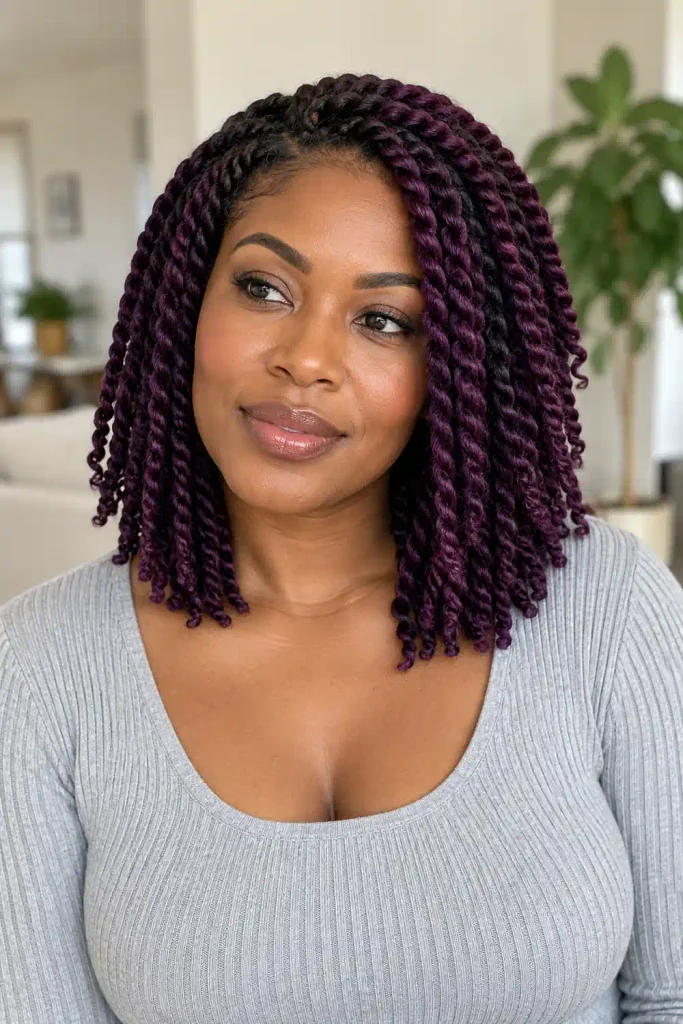
Plum violet brings a purple direction to fall hair color. A darker plum can look understated indoors, while a brighter violet makes the shade immediately visible.
Shoulder-length twists give the color a defined, textured surface. Using a mix of dark and purple extension hair creates a different result than choosing one solid shade.
Decide which quality matters most:
- A dark overall finish.
- A noticeable purple tone.
- A blend of both.
Bring a clear color reference, because plum can look reddish in one photo and blue-purple in another.
20. Burnt Orange Peekaboo Color Beneath Black Hair
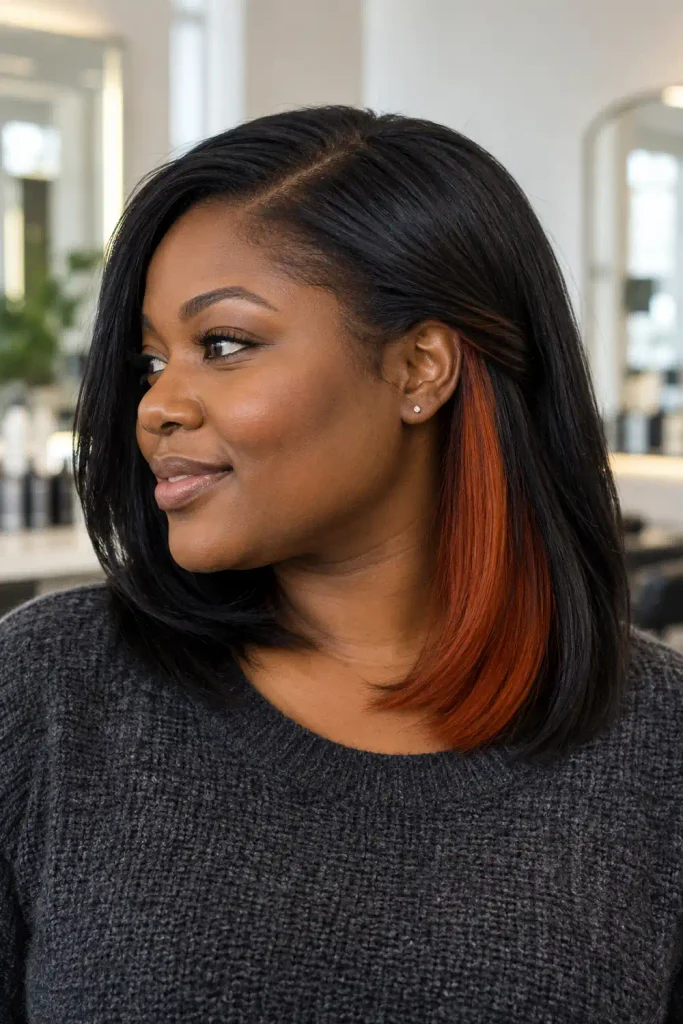
Peekaboo color keeps burnt orange beneath a dark outer layer. Wear your hair down for small flashes of color, then reveal more with a half-up style or tucked side.
This placement gives you control over how visible the orange looks. A narrow hidden section creates a small surprise, while a wider panel makes a stronger statement.
Show your stylist both the hidden and revealed versions you want.
Placement checklist: Decide which side to color, how wide the section should be, and which everyday hairstyle will expose it. Those details shape the finished effect.
21. A Cherry Red Money Piece With a Black Base
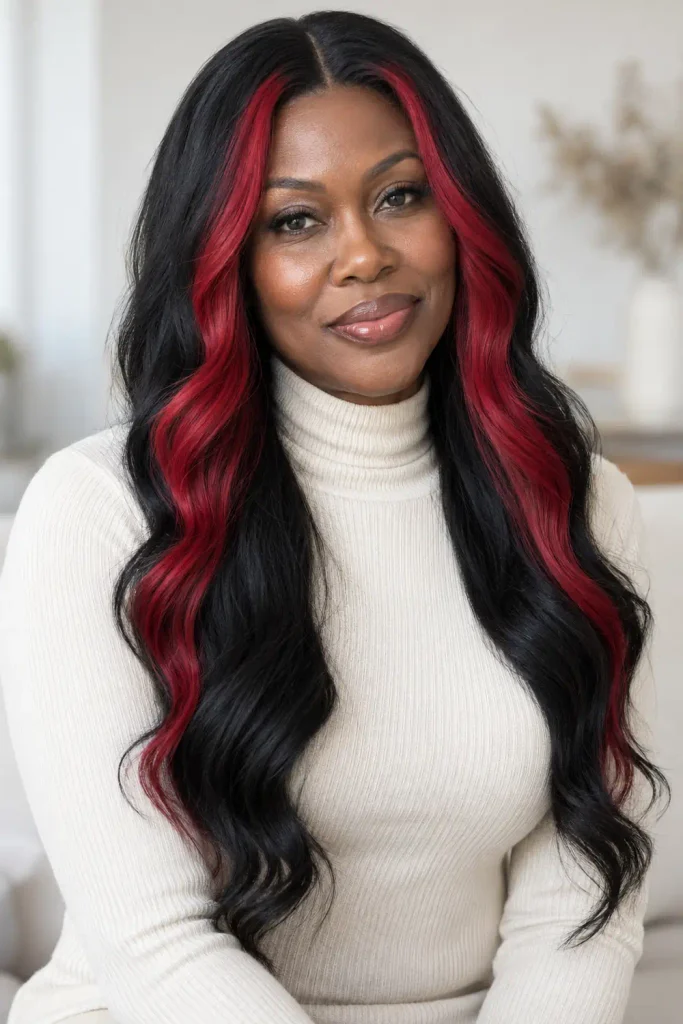
A cherry red money piece puts the brightest color directly around the face. With the remaining hair black, the front section becomes the main feature of the hairstyle.
Choose narrow pieces for a smaller accent or wider panels for a bolder outline. One colored side gives an uneven, expressive finish, while matching sections create symmetry.
Part your hair as you normally wear it when discussing placement.
Reference detail: A front-view photo should show the width of the red section clearly. A close crop can make a narrow money piece appear larger than it is.
22. Rose Gold Blonde With Dark Roots on a Wig
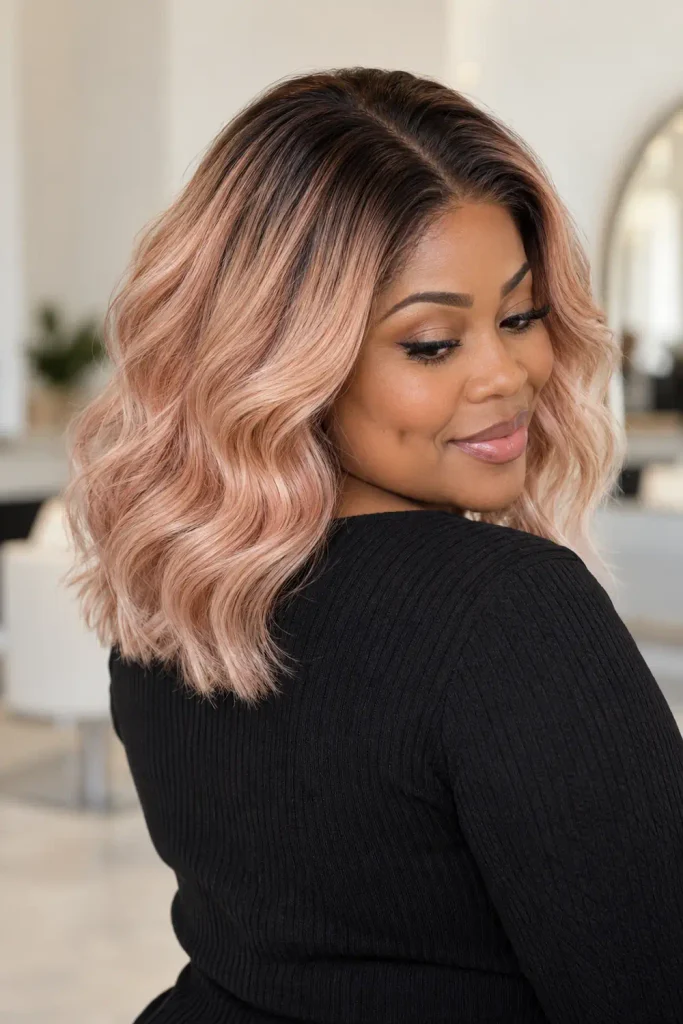
A rose gold blonde wig offers a softer pastel direction for fall. The mix of pink and golden blonde creates a different look from the darker reds and browns on this list.
Dark roots give the pale lengths a clear contrast at the crown. Loose waves show the blend of pink and gold, while a straight bob makes the overall shade more uniform.
When choosing your reference, check:
- How pink the blonde appears.
- How dark the roots are.
- How far the root color extends.
Choose daylight photos so warm room lighting does not hide the pink tone.
23. Bold Cranberry Red on Defined Natural Coils
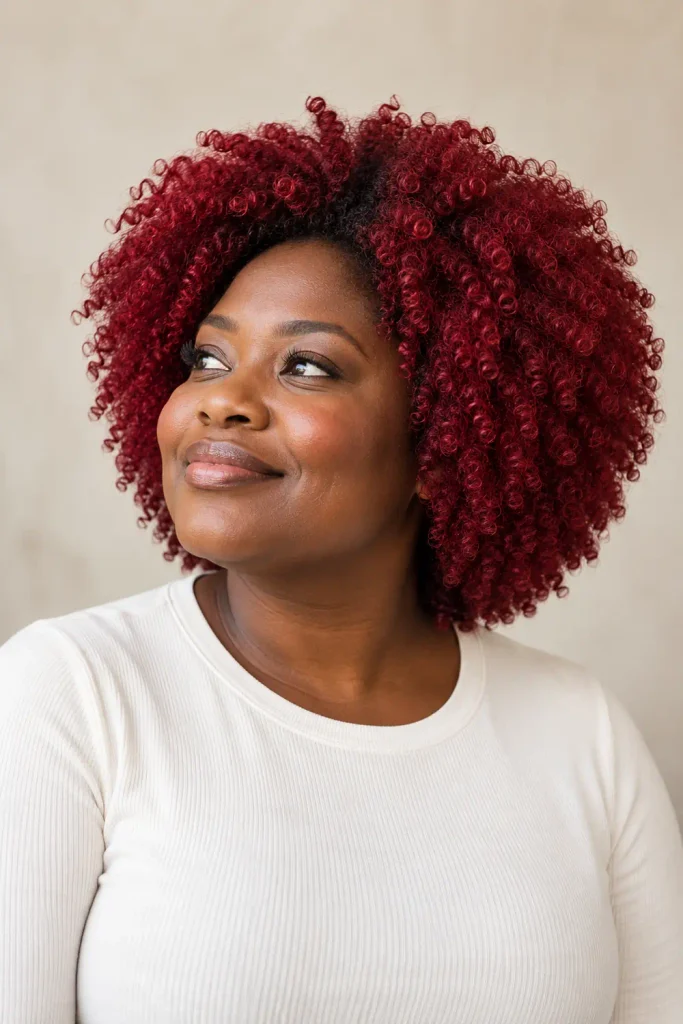
Cranberry red finishes the list with a strong berry color. It has a red-led appearance that sits apart from orange copper, brown mahogany, and purple plum.
An all-over finish makes the entire shape of your natural hair stand out. Selected cranberry sections keep more of your dark base visible and create a less uniform result.
Pick a reference that shows defined coils rather than relying on a straight-hair color swatch.
Final detail: Look at the shade against a plain background. Busy autumn scenery can make it harder to judge how bright or deep the red actually is.
Choosing Your Fall Hair Color
Choosing among these fall hair colors for Black women starts with the amount of change you want to see. Espresso and mocha offer subtle depth, caramel and bronze bring contrast, and ginger or cranberry make color the main feature.
Save two or three favorites, then compare their roots, placement, and brightness. Bring those photos to your stylist or braider, or use them when choosing a wig. A clear reference helps explain more than a shade name alone.
Save this list to Pinterest so your favorite fall color ideas are easy to find when you are ready for a refresh.
